
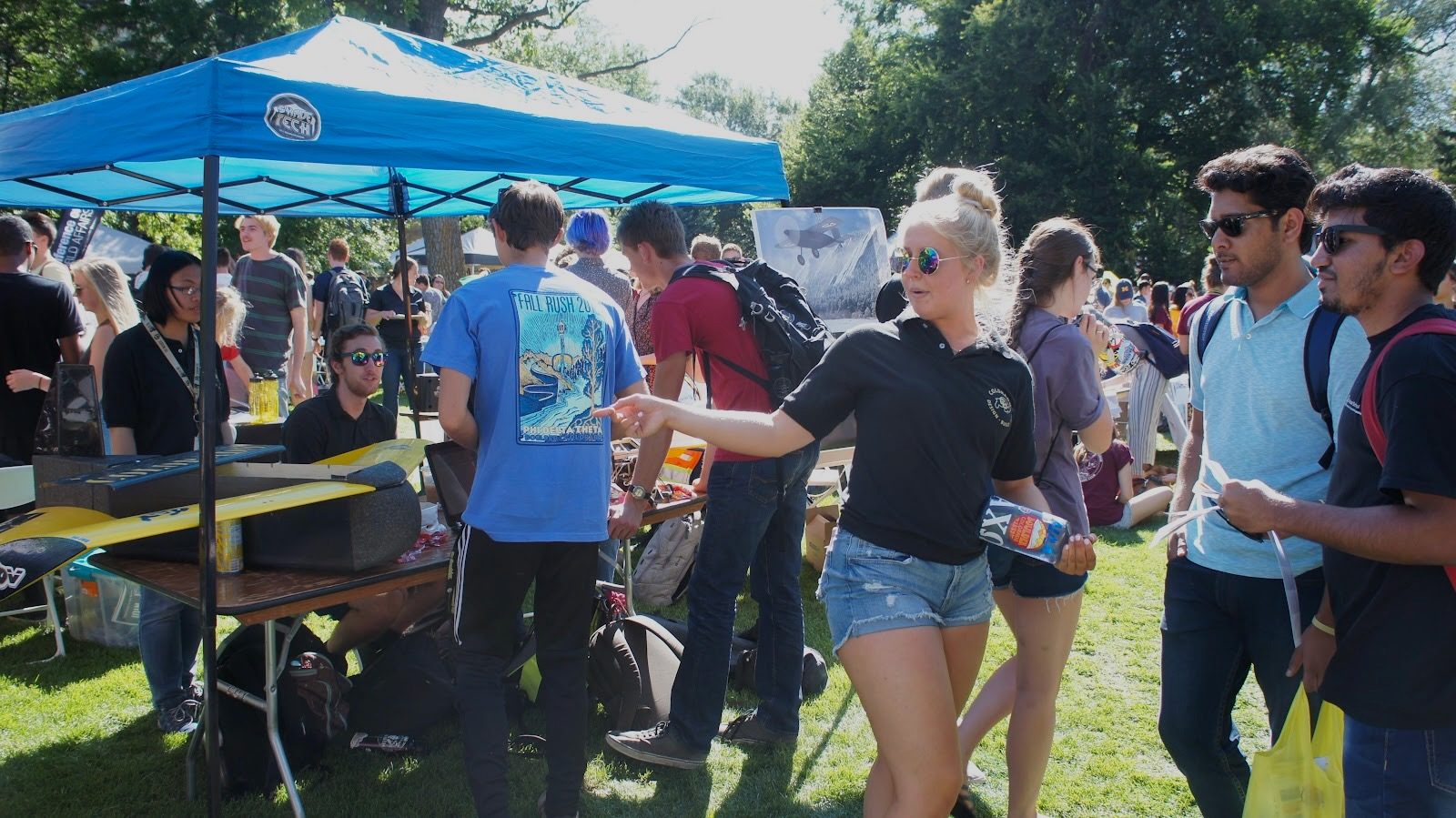
Learning to fly, together
Any major, any year, any amount of experience. Here is how to go from interested to building in about a week.
What you get out of it
Get familiar with engineering
See what an engineering project actually looks like before your senior design class does.
Learn the process
Requirements, reviews, reports, deadlines. The whole cycle in one year.
Hands-on manufacturing and testing
Foam, balsa, carbon, soldering irons and a field full of wind.
Learn how RC airplanes fly
And how to make them fly, which is harder than it sounds at 5,430 feet.
Meet and work with a fun community
Sunday afternoons with people who also think planes are cool.
Leadership opportunities
Stay for a year and there is a high chance of a lead role the next.
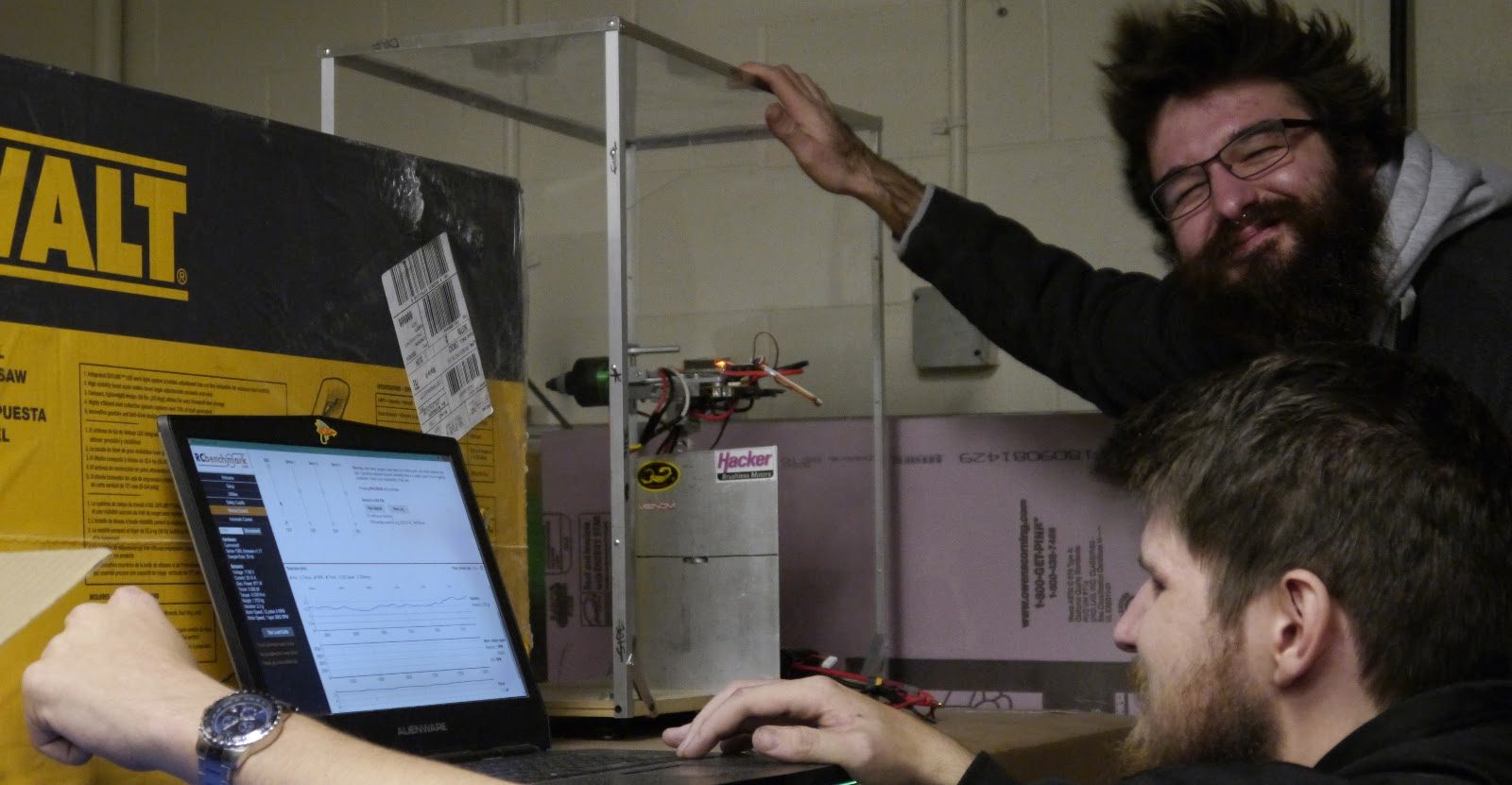 First build night
Wherever you are starting from
- No experience in CAD, electronics or aerodynamics. You will work on building our first prototype and learn at least one of those this semester.
- Some experience with one of them. You will build prototypes and design items that go onto the competition plane.
- Other knowledge entirely. Talk to a lead. There is a high chance we need your experience.
How to get started
Complete the form
One short form. It puts you on the mailing list, starts access to the projects space, and lets you pick which meeting day works for you.
Open the formJoin Teams
Join the channels of the subteams you are interested in and add the DBF folder to your OneDrive. Meeting rooms and pinned links live there.
Open TeamsSet up your tools
Install the software and knock out any ITLL or Aerospace shop trainings you are missing. Bookmark the pinned links in your subteam channel.
Member resourcesShow up Sunday at 2
Come to a general meeting and introduce yourself. If you want a bigger role, get in contact with the subteam lead directly.
Meet the leadsThings people ask before joining
Anything else, ask on Teams or follow @coloradodbf on Instagram for build photos and meeting reminders.
No. Most people who join have never touched CAD, electronics or aerodynamics. You will learn at least one of those this semester, starting with the foam prototype workshops in the first few weeks.
No. The leads alone cover aerospace, mechanical engineering and computer science minors. If you have other knowledge, talk to a lead, there is a high chance we need it.
General meetings are Sundays from 2pm to about 5pm. Subteams meet once a week on top of that, at a time each lead sets. Details are in Teams and on the calendar.
The Sunday meeting plus a subteam meeting is the baseline, roughly three to five hours a week. Build season and the weeks before the design report and competition are busier, and you choose how deep you go.
Yes. New members are welcome at any point. Later in the year you will spend more time on manufacturing and testing than on design, which plenty of people prefer anyway.
The team travels to the AIAA fly-off in April when we are invited. The 2027 competition is in Tucson, Arizona. Travel spots are set by the leads based on involvement and budget.
Yes, and it is short. Most of the current leads joined as members the year before. Stay for a year and there is a high chance of a lead role.
Ready? Start with the form.
It takes two minutes, and we will send you the room for Sunday.