
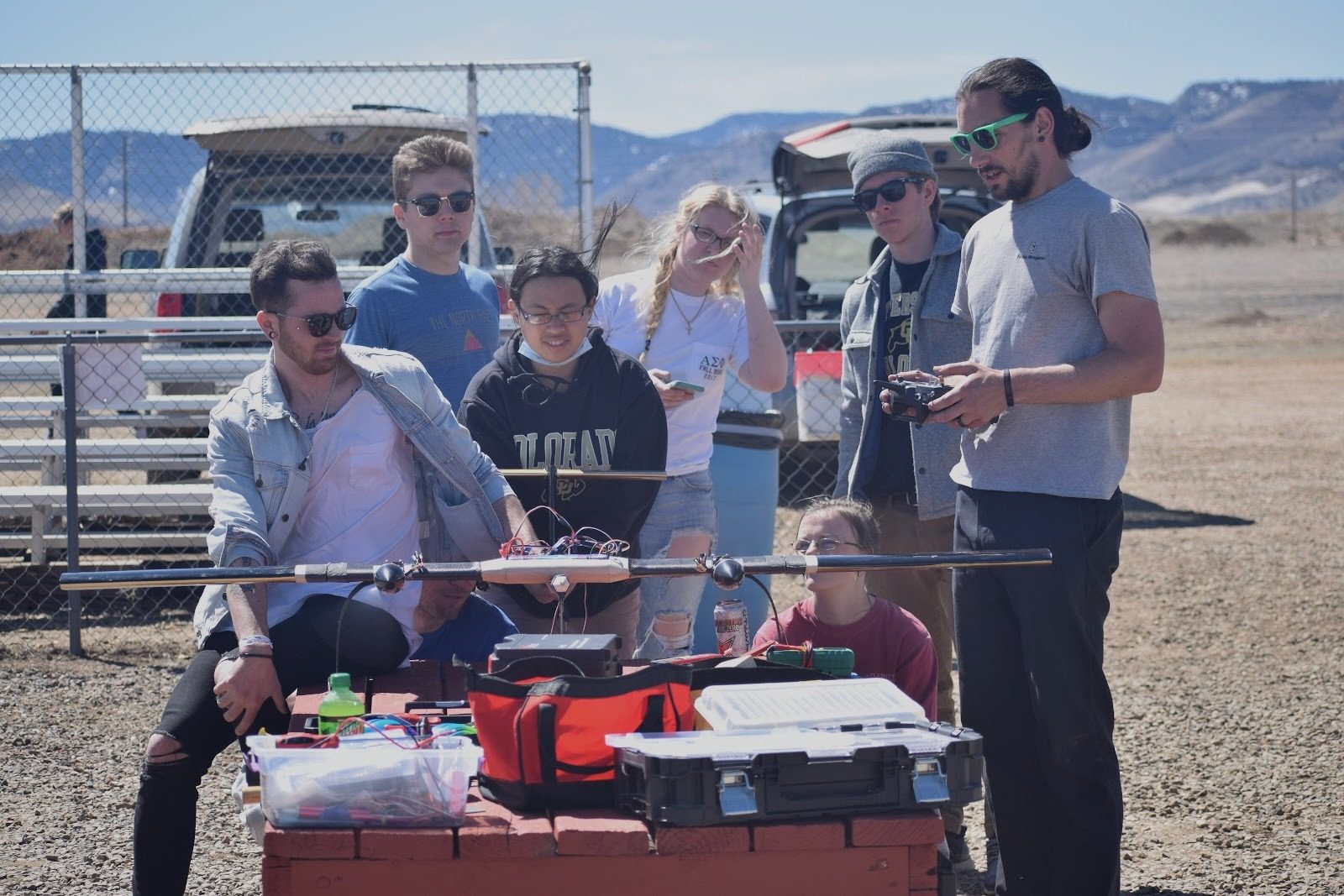
A student-run competition team at CU Boulder
Colorado Design Build Fly designs, analyses, manufactures, tests and flies a purpose-built aircraft each season for the AIAA Design/Build/Fly competition. Students lead every stage, from requirements through flight test, outside of class.
A competition club, first and foremost
Every year AIAA publishes new rules. New rules mean new requirements, a new design and a new plane. That cycle is the whole club: we read the rules in August, fly the result in April, and start over.
Members come from aerospace, mechanical and plenty of other majors, first year through graduating senior. Most arrive with no CAD, electronics or aerodynamics experience and learn at least one of them in their first semester.
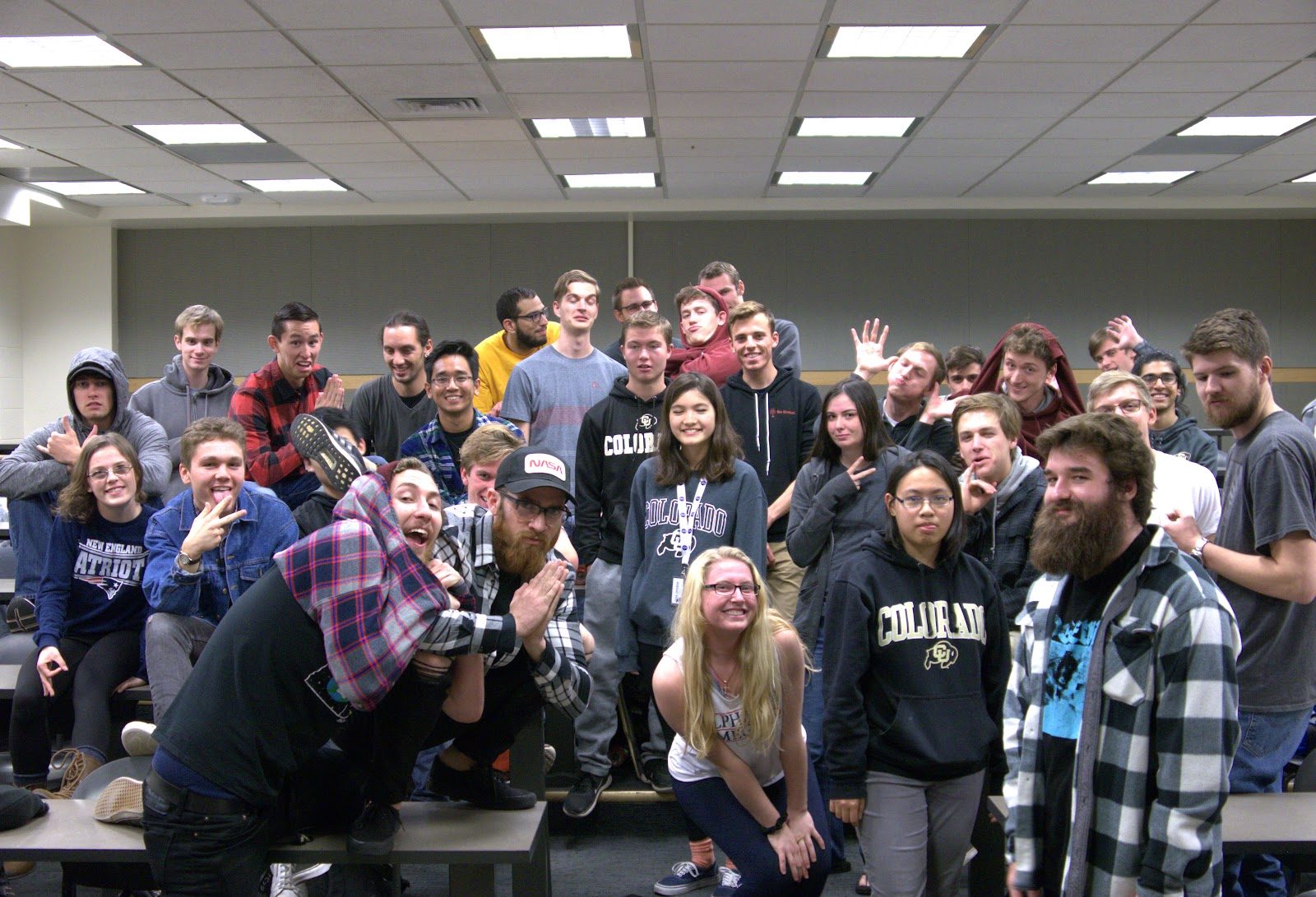 General meeting
Requirements to flight test, then back again
Every stage is student-led and every stage is reviewed. Flight-test results feed back into analysis, so the aircraft that flies at competition is the product of measured iteration rather than a single guess.
Requirements
Concept development
Preliminary design
Detailed design
Analysis
Manufacturing
Ground testing
Flight testing
Iteration
What you might be working on
One new airframe every season, each one shaped by that year's mission set.
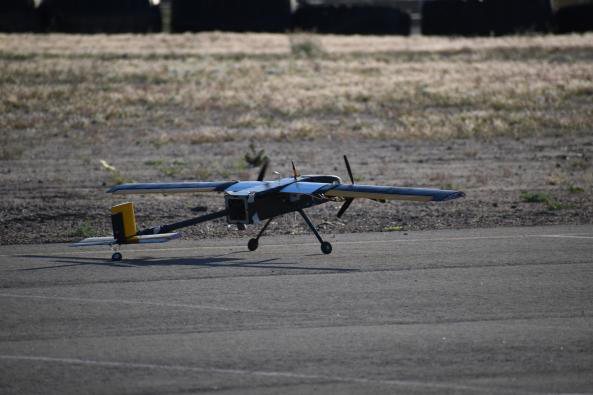
Taxiing out at the Tucson fly-off.
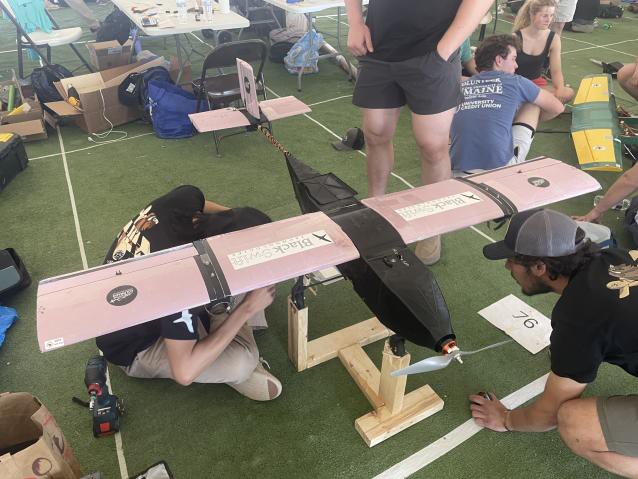
The pink airframe on its build stand in the pits.
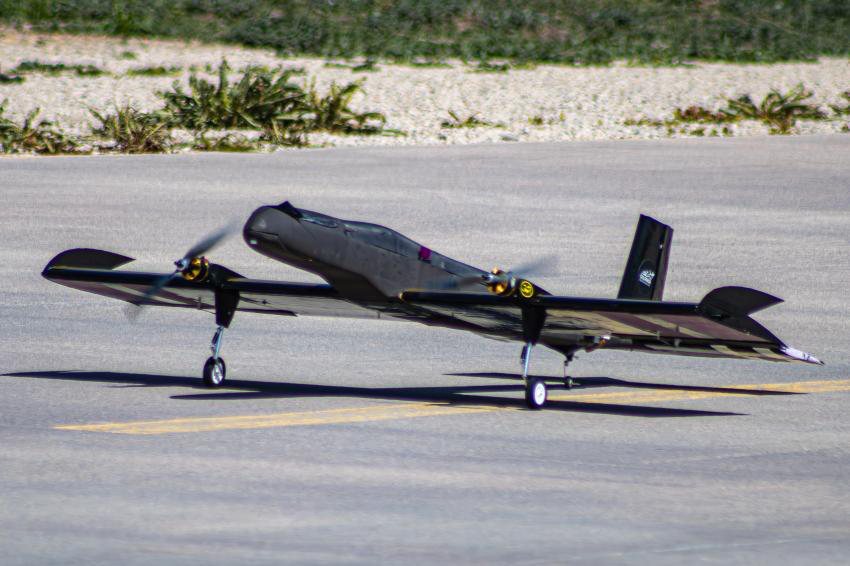
Banner-towing bush plane concept, built for the 30th competition's mission set.
 2025 to 2026 concept
Designed to the mission, not the other way round
The 30th competition asked for a bush plane that could fly passenger and cargo charter runs and then tow a banner. The 2025 to 2026 concept above came out of that mission analysis: sizing, payload layout and the tow release all follow from the scoring rules.
How the team is organised
Four technical subteams each own part of the aircraft, and the Treasurer keeps the money and sponsors in order. Pick the one that sounds like you, or try a couple before you settle. Meet the people behind each one.
 Aerodynamics
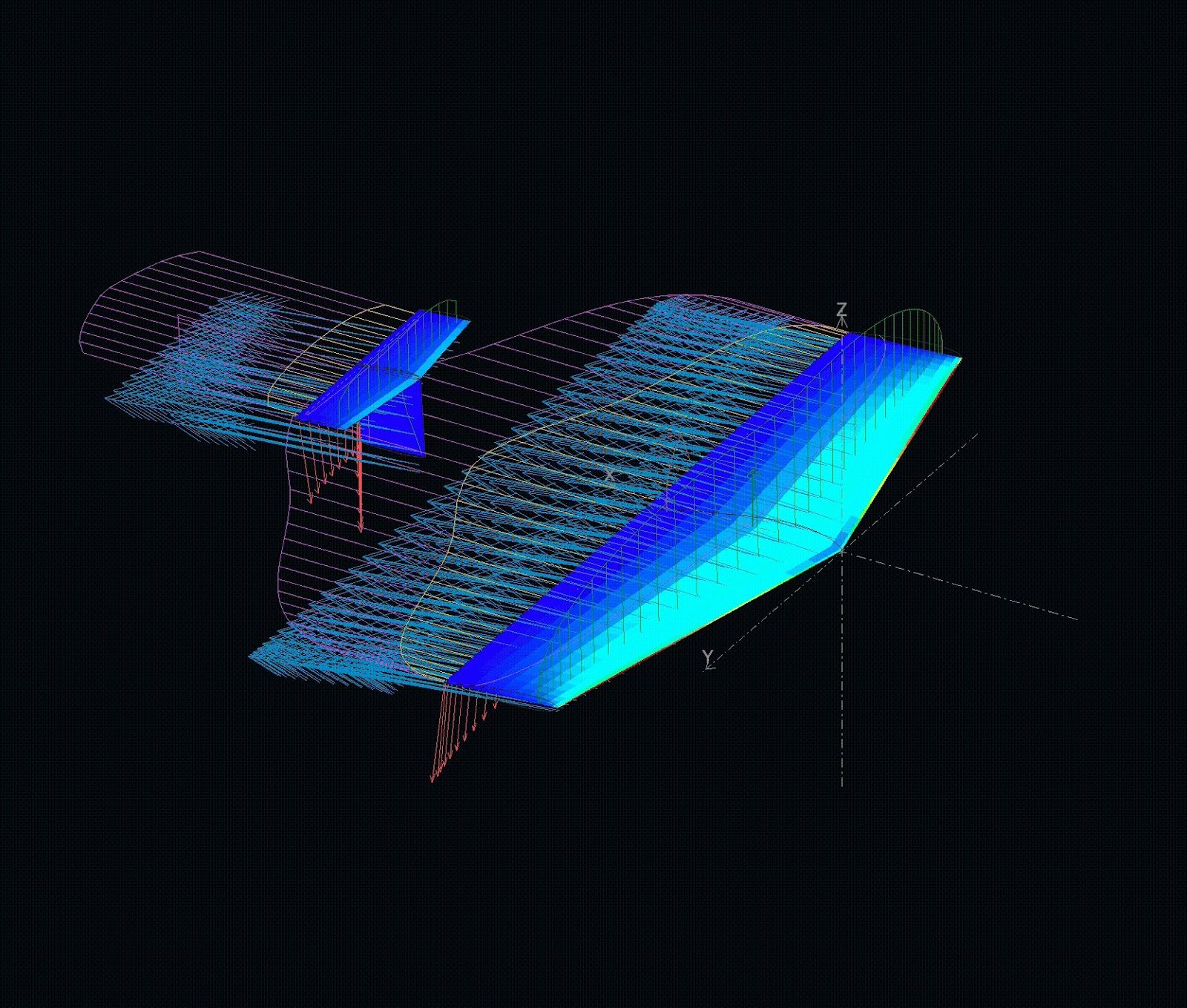
Aerodynamics
Designs and analyses the lifting surfaces, aircraft dynamics and propulsion system to get the most out of the whole aircraft. Airfoil selection, drag polars, sizing, stability and control, propeller and motor matching, and the mission simulation that tells us what to build. Also owns the proposal and design report.
Leads: Damien and Jay
 Structures and Mission
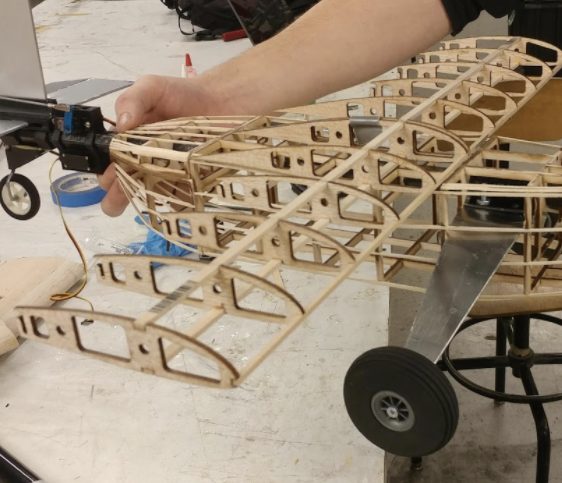
Structures and Mission
Designs the internal and external structure of the aircraft for weight and serviceability, and the internal layout and systems specific to each year's competition missions: payload bays, release mechanisms and loading procedures. The two jobs are tied together, so they sit on one subteam.
Leads: Justin Yaung and Ryan Aba Riebli
 Avionics and Telemetry
Avionics and Telemetry
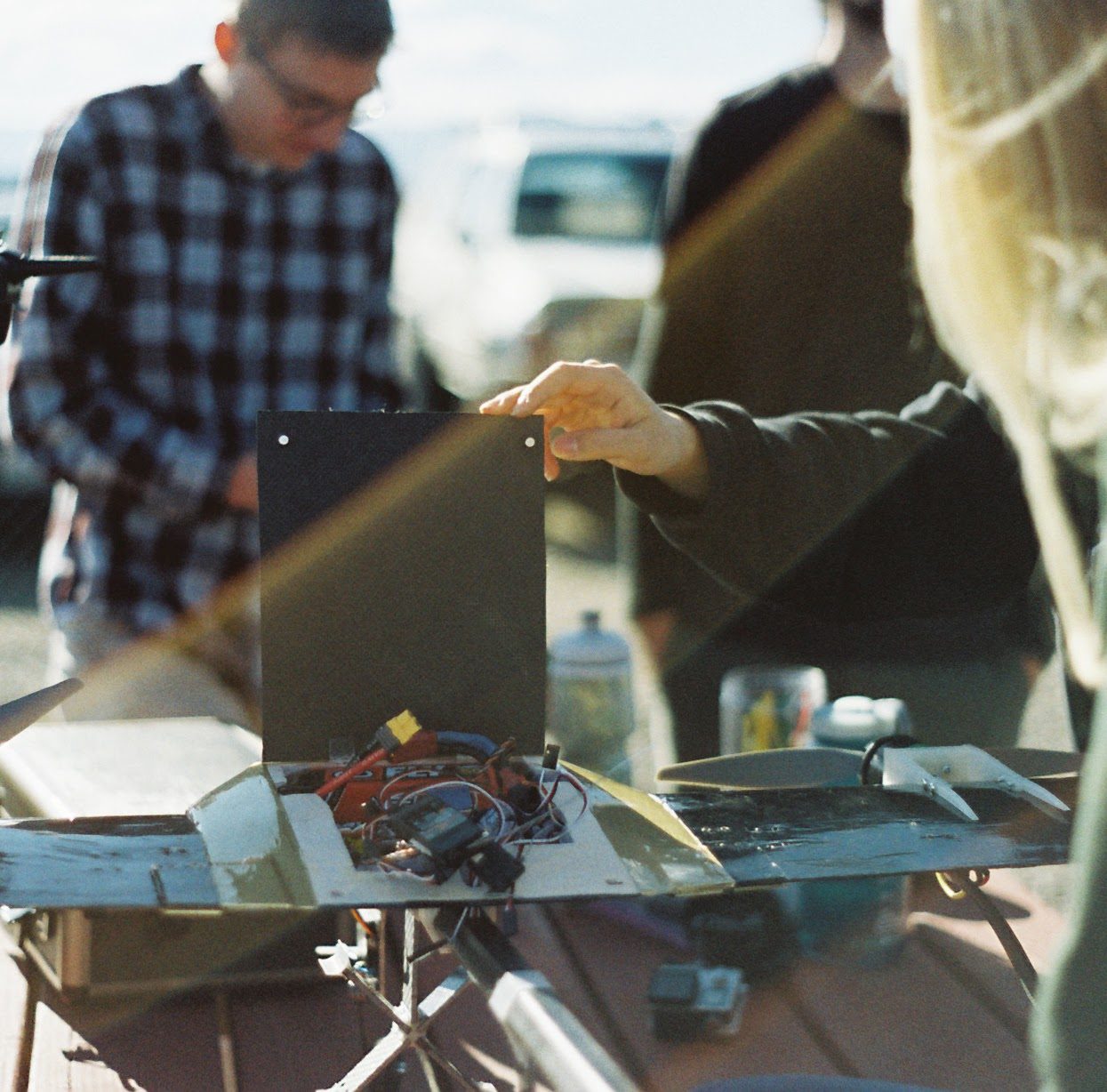
Designs the systems that record flight-test data, return real-time telemetry and operate everything else on the aircraft: control system, wiring harness, PCB design and radio links. That data goes straight back into the aerodynamic design.
Leads: Kareem Ahmed
 Manufacturing
Manufacturing
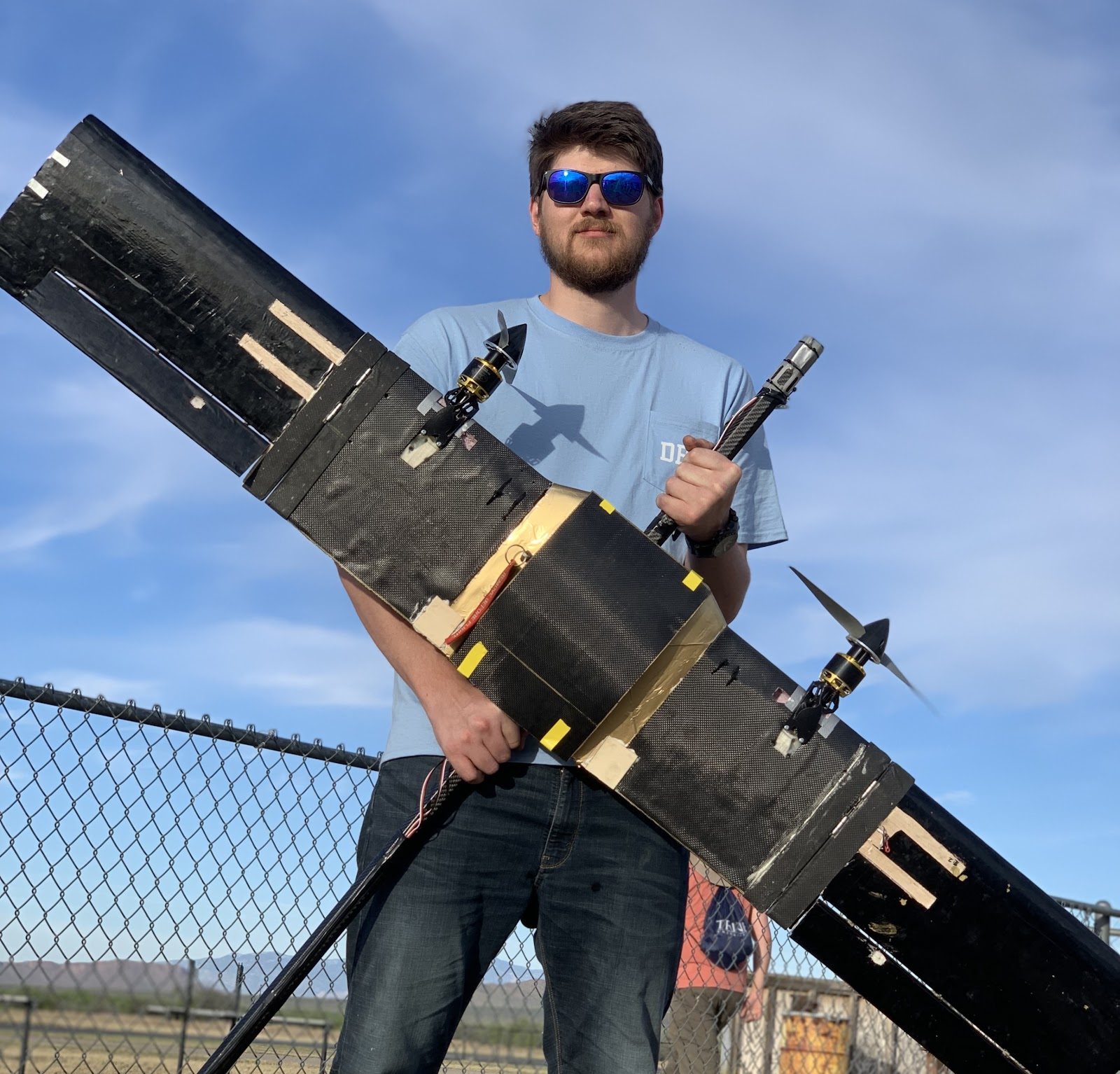
Turns the CAD into an aircraft. Foam prototypes first, then the fuselage prototype, then the competition airframe: laser-cut and 3D-printed parts, carbon-fibre layups, integration of the propulsion, avionics and mission systems, bench checks, and the ground and flight test campaign.
Leads: Dariel Morales, Tyler Brining and Dinuka Hannadige
 Finance and Outreach
Finance and Outreach
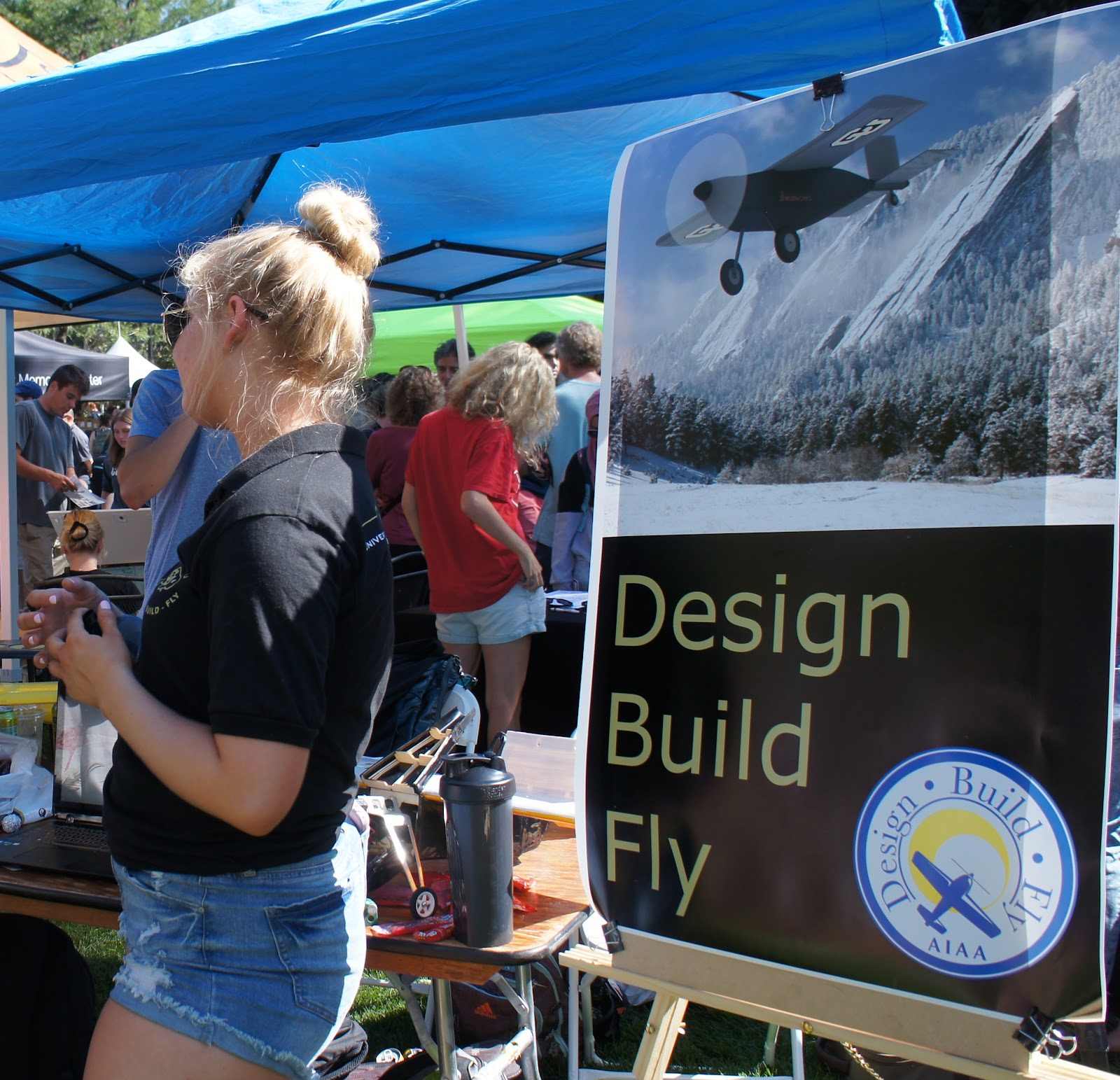
Tracks program spending, manages sponsor relationships and external funding, and runs the team's social presence and outreach on campus.
Leads: Aadhit Gopinath
Where the team has been
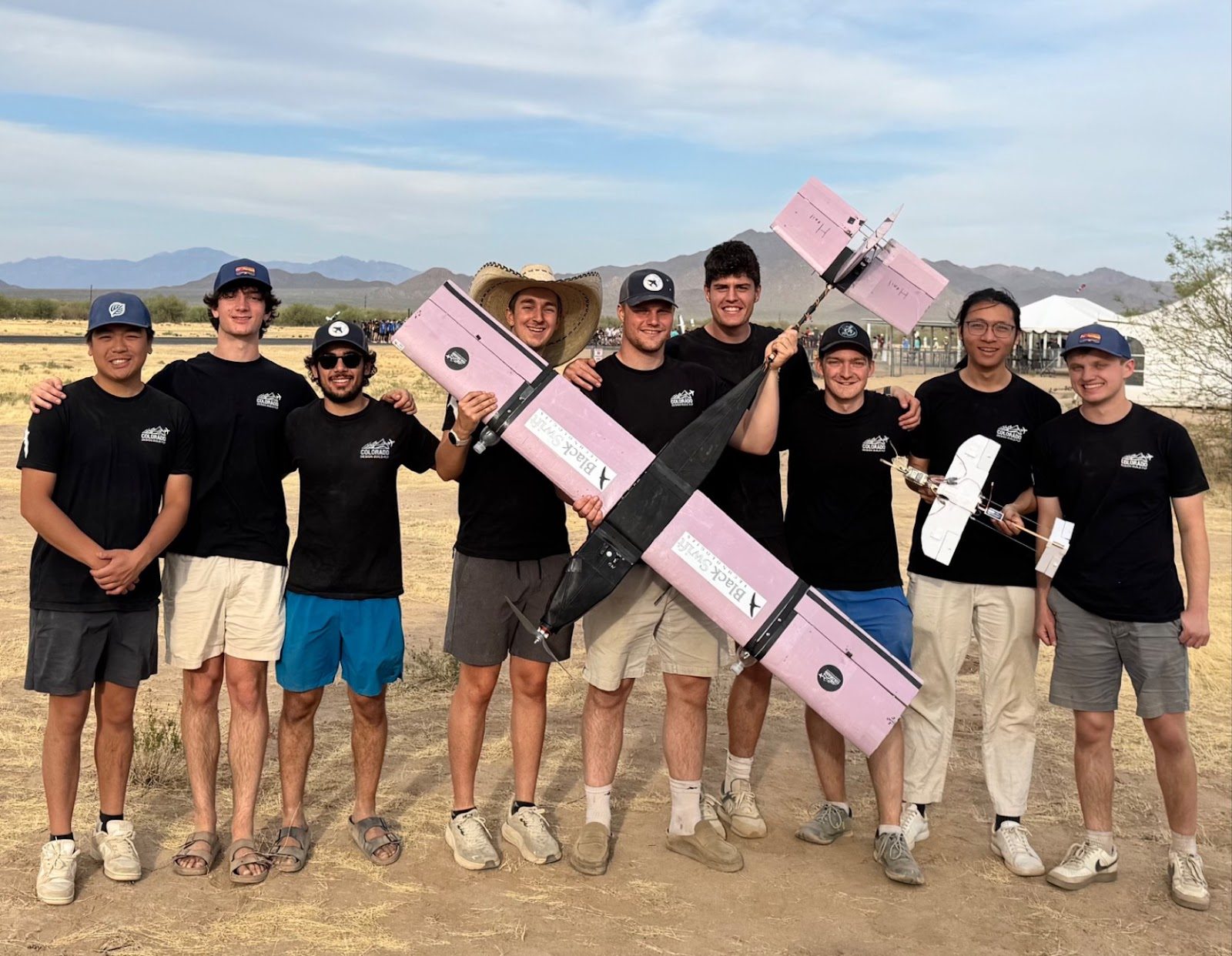
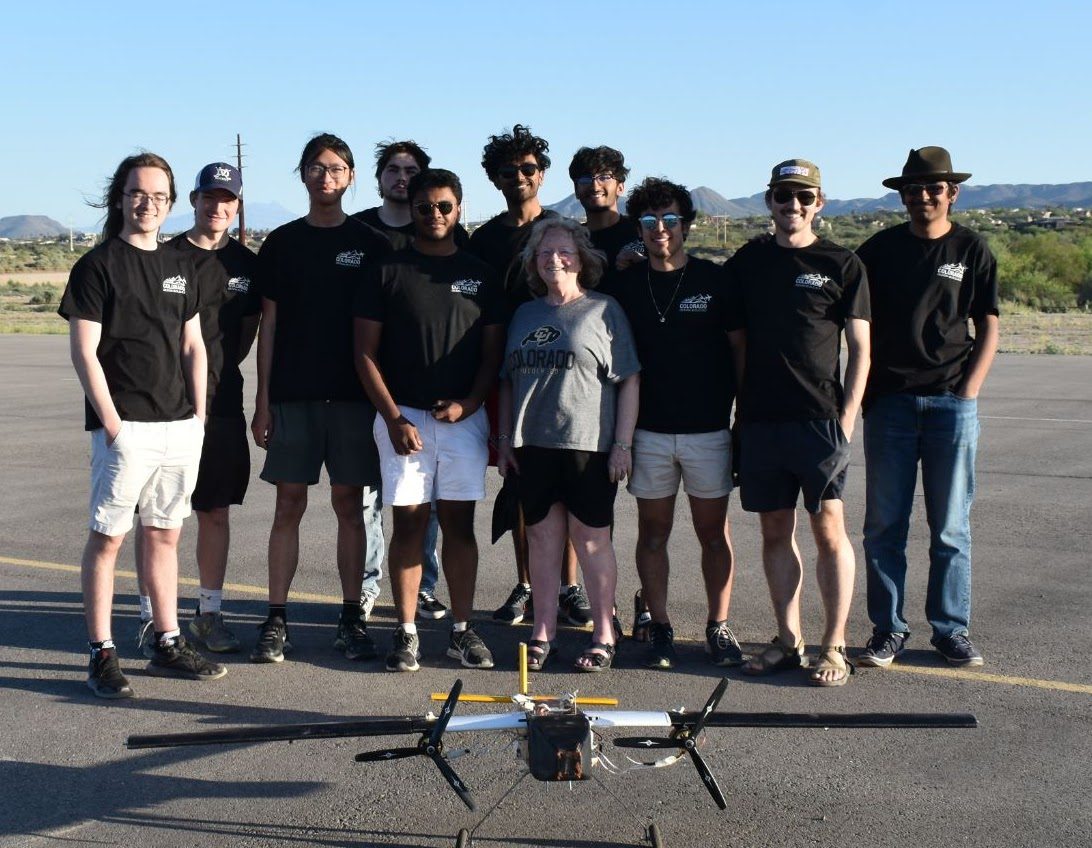
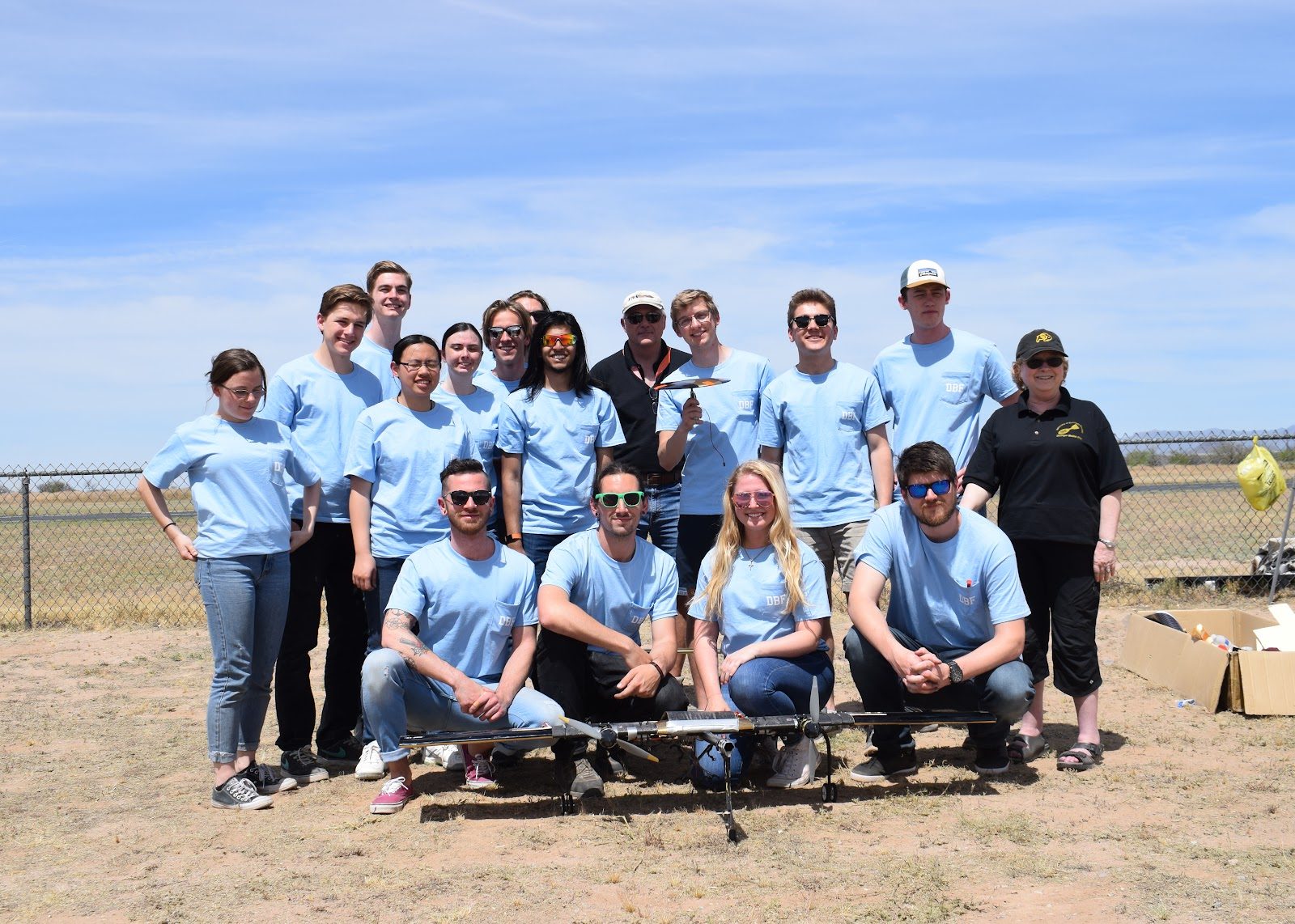
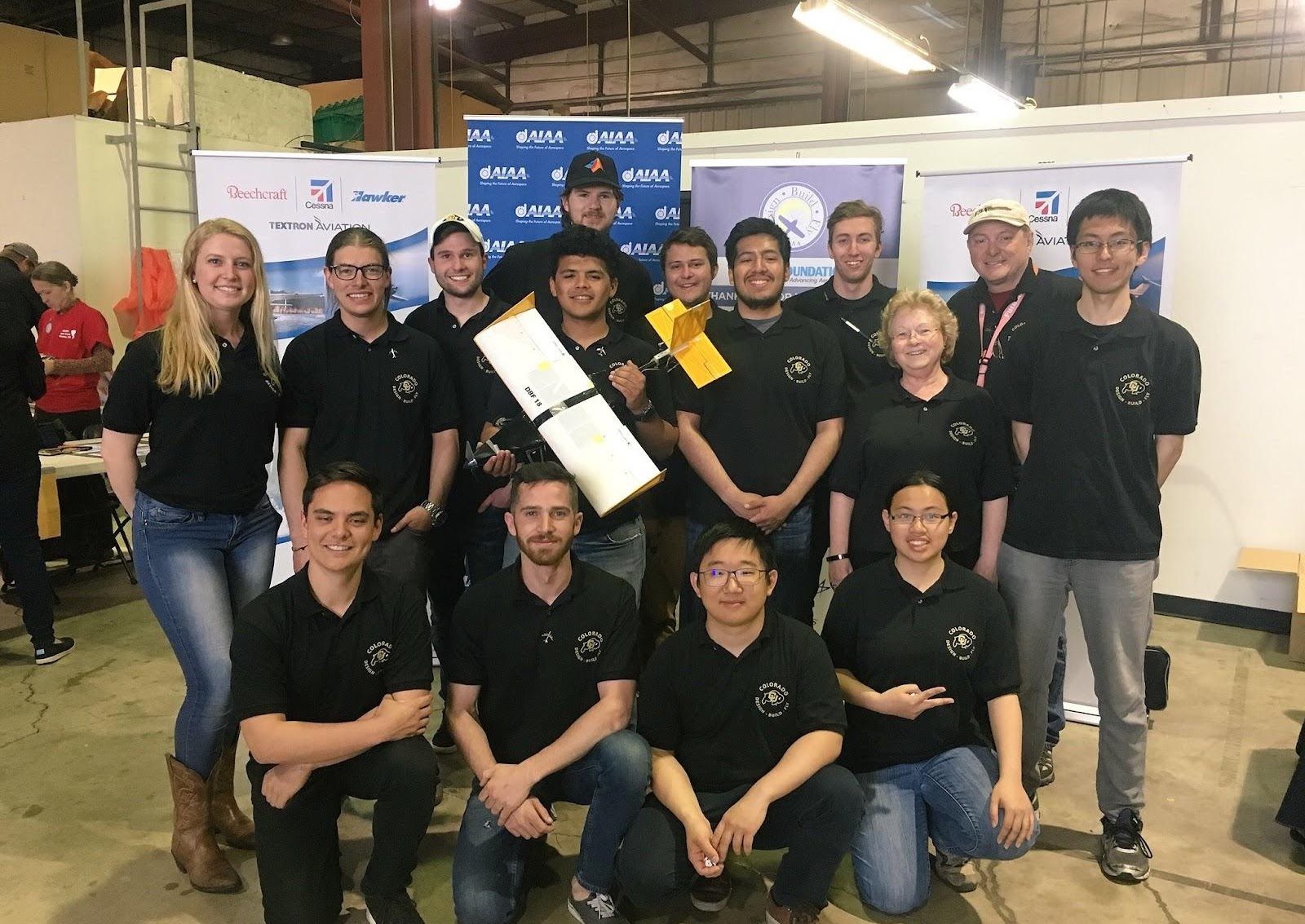
Fly-offs in Tucson and Wichita over the years. CU Boulder first appears in AIAA's results in 2003, and the aircraft have carried Buffalo names ever since: Water Buffalo, Buffaloader, Buffalo Wings, Buff Bambino, H2BuffalO, Ralphie's Revenge. Best finish: third overall at Wichita in 2012. Full record.
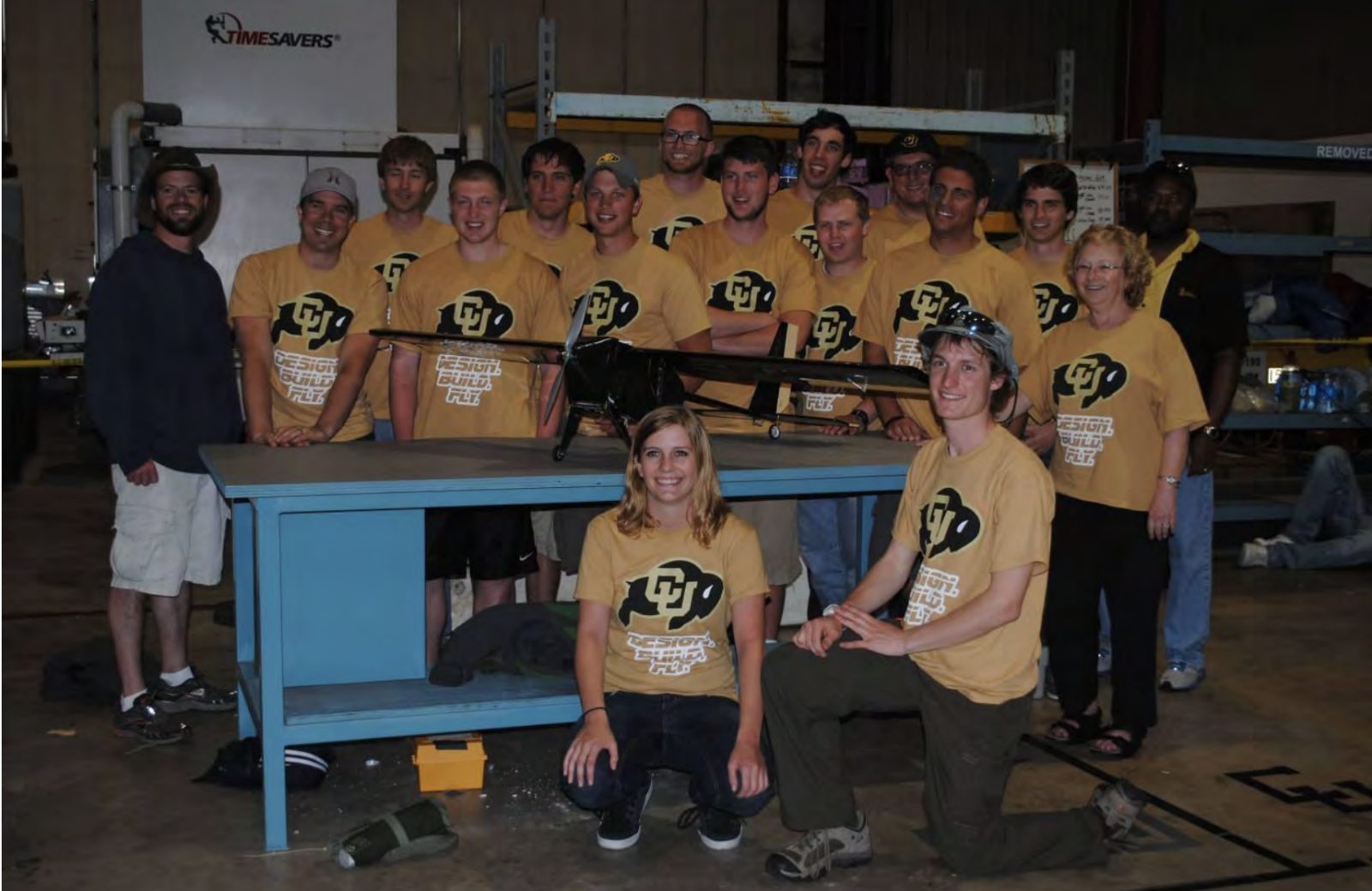
Want to be in next year's photo?
General meetings are Sundays from 2 to 5. Come to one, find a subteam, and start building.